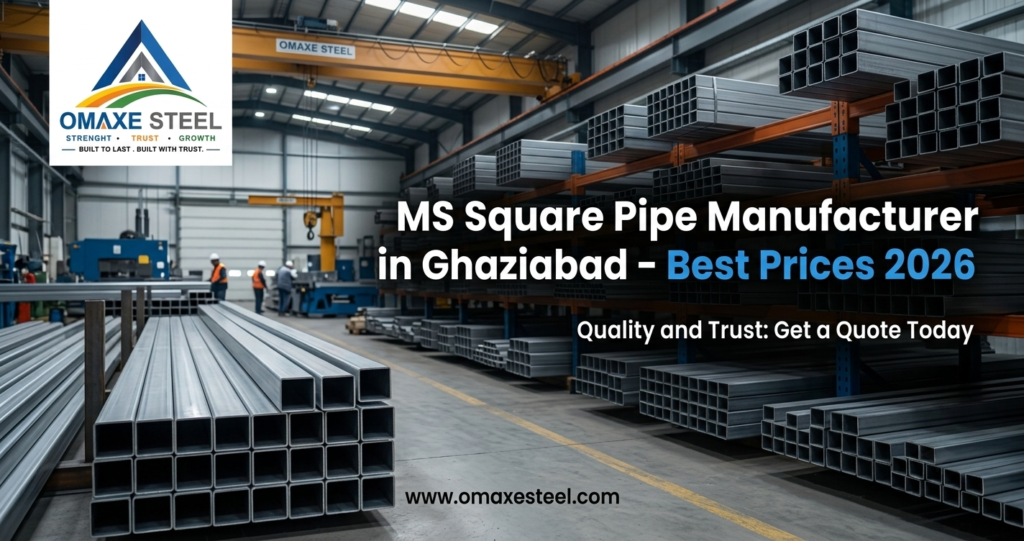

Scaffolding plays an essential role in modern construction by providing temporary access and support for workers, tools, and materials at elevated locations. From residential buildings and commercial complexes to industrial facilities and infrastructure projects, properly selected scaffolding helps construction teams carry out work more efficiently when the system is correctly designed, installed, inspected, and used.
Understanding Scaffolding Manufacturing in Ghaziabad helps contractors, builders, and procurement professionals evaluate the materials, components, and quality considerations involved in purchasing scaffolding equipment. Manufacturing quality matters because inconsistent dimensions, poor welds, damaged fittings, or unsuitable materials can affect component compatibility and workplace safety.
Ghaziabad is an important industrial location in the National Capital Region, making it relevant to construction-material sourcing. However, buyers serving projects across India must evaluate products according to their specifications, intended applications, and documented quality requirements rather than location alone.
This guide explains the scaffolding manufacturing process, common scaffolding systems, materials, quality checks, and practical ways to choose a suitable manufacturer or supplier. It also discusses how Omaxe Steel Equipments can be considered when researching relevant scaffolding products.
Scaffolding Components and Their Applications
Scaffolding is a system of connected components rather than a single product. Each component serves a specific purpose, and compatibility between parts is essential for the complete structure to function as intended.
| Component | Main function | Typical application |
| Mild steel scaffolding pipes | Form structural members in compatible systems | Construction access and temporary support systems |
| Scaffolding pipe clamps | Connect compatible tubes | Tube-and-coupler scaffolding |
| Scaffolding base plate | Distributes the load at the base of a standard | Providing a bearing surface on suitable foundations |
| Scaffolding prop jack | Adjusts or supports compatible temporary propping arrangements | Formwork and temporary support applications |
| Scaffolding frames | Provide preconfigured structural sections | Building construction and maintenance |
The exact use of each component depends on its design, dimensions, rated capacity, system compatibility, and the manufacturer’s instructions. Components should never be selected solely because they appear physically similar.
Scaffolding Manufacturing Process: From Raw Material to Finished Components
Scaffolding manufacturing involves converting raw materials into components that can be assembled into temporary access or support structures. The exact process varies according to the product design, manufacturing equipment, material specifications, and intended application.
1. Raw Material Selection
The process begins with selecting suitable steel or other specified materials. Mild steel is commonly used for scaffolding pipes and many accessories because it offers a practical combination of strength, workability, and cost.
Buyers should confirm the steel grade, pipe dimensions, wall thickness, and material documentation before ordering. The material must be suitable for the intended loads and environmental conditions.
2. Cutting and Forming
Steel pipes, plates, and sections are cut to specified dimensions. Depending on the product, manufacturing may also involve bending, forming, threading, or preparing surfaces for joining.
Accurate measurements are important because components with inconsistent dimensions may not fit together correctly during installation.
3. Welding and Component Assembly
Where the design requires welded joints, suitable welding procedures and trained personnel are essential. Base plates, brackets, and other fabricated components must be assembled according to their intended design.
Welds should be inspected for visible defects, including cracks, incomplete joints, and irregularities that could compromise the component. Inspection methods should be appropriate to the component and applicable specifications.
4. Finishing and Corrosion Protection
Depending on the product, surface finishing may include cleaning, painting, or galvanizing. These treatments can help reduce corrosion, particularly when equipment is exposed to moisture and outdoor conditions.
However, a protective coating cannot compensate for unsuitable material, poor fabrication, or inadequate maintenance.
5. Dimensional Inspection and Final Checks
Finished products should be checked against their specifications. Relevant checks may include overall dimensions, straightness, thread operation, connection fit, surface condition, and weld quality.
Load testing may be required where specified by the design or applicable standards. Buyers should request documented test results when relevant rather than assume that every component has been load-tested.
These stages describe general industry practices; they should not be interpreted as confirmation that every process is performed in-house by a particular supplier.
Types of Scaffolding and Their Applications
Different scaffolding systems suit different construction requirements. Selecting the right system depends on working height, site layout, access needs, load requirements, and the manufacturer’s design instructions.
| Scaffolding type | Common applications | Key selection considerations |
| Tube-and-coupler scaffolding | Building maintenance, masonry, and complex structures | Tube specifications, compatible couplers, bracing, and ties |
| Frame scaffolding | Repetitive building work and façade access | Frame dimensions, locking connections, and system stability |
| Cuplock scaffolding | Construction projects requiring modular assembly | Compatible standards, ledgers, locking components, and approved configuration |
A modular system can simplify repetitive assembly, while tube-and-coupler arrangements may offer flexibility around irregular structures. Neither system is automatically suitable for every project.
The selection should be based on a competent assessment of the site, the intended work, and the relevant structural and safety requirements.
Materials Used in Scaffolding Manufacturing
Material quality directly affects durability, connection reliability, and suitability for the intended application. When comparing Scaffolding Manufacturing in Ghaziabad suppliers, buyers should look beyond the general description of a product as “heavy duty” or “high quality.”
Mild steel is widely used for scaffolding tubes, plates, and fabricated accessories. However, not all steel products have the same grade, dimensions, wall thickness, or mechanical properties.
The pipe’s outside diameter and wall thickness must match the intended system design. A pipe that appears similar to another may have different structural characteristics. Likewise, a thick base plate or heavy-looking clamp should not be assumed safe without appropriate design and specification information.
Surface protection also matters. Galvanized or coated components can provide improved protection against environmental exposure, but buyers should inspect for damaged finishes, corrosion, and signs of improper storage.
For reusable scaffolding equipment, proper handling and maintenance help extend service life. Components should be stored in a way that limits damage, deformation, and unnecessary exposure to moisture.
Quality Control and Scaffolding Safety Considerations
Quality control should cover more than the appearance of the finished product. Scaffolding safety depends on component integrity, system design, installation, inspection, and correct use.
The Bureau of Indian Standards provides relevant guidance and standards for construction safety. For example, IS 4014 (Part 2):2013 addresses safety provisions for steel tubular scaffolding. The applicable edition and requirements should be verified for the specific project.
Important quality considerations include:
- Dimensional accuracy: Check that components match the specified measurements and connect correctly.
- Material condition: Look for bent tubes, cracks, excessive corrosion, damaged plates, and other visible defects.
- Weld integrity: Inspect fabricated joints and seek appropriate test documentation where required.
- Connection compatibility: Ensure clamps, couplers, pins, and other fittings are designed for the relevant system.
- Load documentation: Confirm the permitted loads and configuration requirements from reliable technical documentation.
- Site inspection: Have a competent person inspect the assembled scaffold before use and as required during the work.
Scaffolds should be erected, altered, and dismantled by trained personnel under appropriate supervision. Suitable foundations, bracing, ties, guardrails, access arrangements, and fall-protection measures must be provided as required by the design and applicable safety rules.
No single component can make an entire scaffold safe on its own.
Scaffolding Manufacturing in Ghaziabad and Across India
Ghaziabad’s industrial location in Uttar Pradesh, close to Delhi and other National Capital Region markets, makes it a relevant place for construction-material sourcing. Local buyers may benefit from easier supplier communication, access to product information, and coordination of deliveries, depending on the supplier’s arrangements.
At the national level, construction projects differ substantially in scale, climate, logistics, and technical requirements. A residential building, a commercial complex, and an industrial maintenance project may all need different scaffolding configurations.
For buyers sourcing across India, the important considerations remain consistent: confirm product specifications, verify quantities, check delivery terms, and ensure that components are suitable for the intended application. Transport costs and delivery timelines should also be considered when comparing suppliers.
The phrase “Scaffolding Manufacturing in India” covers a broad range of manufacturers, fabricators, traders, and suppliers. Buyers should distinguish between a company that manufactures a particular component and one that sources or distributes it. This distinction helps set realistic expectations about customization, production lead times, quality documentation, and product availability.
How to Choose the Right Scaffolding Manufacturer
Choosing a suitable Scaffolding Manufacturing in Ghaziabad supplier begins with clearly defining the project requirements. A detailed specification helps prevent ordering components that do not fit the intended system.
Ask the supplier for information about material grade, pipe dimensions, thickness, finish, connection type, and relevant product documentation. If the project requires a particular standard or certification, verify the claim against the applicable documentation rather than relying on verbal assurances.
Buyers should also consider consistency across the order. A mixed batch of components with different dimensions or incompatible fittings can delay installation and create additional costs.
Pricing is another important consideration, but the lowest quotation is not necessarily the most economical option. Compare the complete offer, including specifications, inspection arrangements, packaging, transport, delivery schedule, replacement terms, and after-sales communication.
Finally, confirm whether the supplier can meet the required quantity and schedule. If the project needs repeat deliveries, clarify how the supplier will maintain consistency across orders.
Common Scaffolding Procurement Mistakes
Procurement mistakes can affect both project costs and workplace safety. One common error is selecting products based only on price without checking specifications. A low-cost component may be unsuitable for the intended load or incompatible with equipment already available on site.
Another mistake is overlooking the condition of reusable material. Bent pipes, cracked fittings, damaged threads, and excessive corrosion should not be accepted without an appropriate assessment.
Buyers sometimes assume that all clamps and couplers are interchangeable. In reality, compatibility depends on the tube dimensions, connector design, and intended application. Using an unsuitable fitting can compromise the integrity of the assembly.
Unclear load ratings also create avoidable risk. Never estimate a scaffold’s capacity from its appearance or from the strength of an individual component. The complete system must be designed and configured appropriately.
To reduce these problems, provide the supplier with accurate requirements, request written specifications, inspect deliveries, and keep records of product details and relevant quality documents.
How Omaxe Steel Equipments Supports Scaffolding Product Requirements
Omaxe Steel Equipments supplies steel and industrial products for construction, infrastructure, and industrial applications across India. Its website includes a dedicated Scaffolding Parts category featuring products such as clamps, base plates, prop jacks, and related accessories.
Customers researching individual components can review the following pages:
- Mild Steel Scaffolding Pipes — review the available pipe range and confirm the specific scaffolding product’s dimensions and specifications.
- Mild Steel Scaffolding Base Plate — explore the scaffolding parts range for base plate options.
- Mild Steel Scaffolding Prop Jack — review product information for temporary propping applications.
- Cast Iron Scaffolding Pipe Clamp — review the listed clamp and its intended use.
Before purchasing, customers should confirm current availability, dimensions, technical specifications, applicable documentation, and suitability for their project. The website’s product descriptions are a useful starting point, but project-specific safety and engineering requirements should guide the final selection.
For product enquiries or quotations, visit the Omaxe Steel Equipments Contact Us page.
Checklist for Evaluating a Scaffolding Supplier
Use this checklist when comparing suppliers for construction or infrastructure projects.
| Evaluation area | What to verify | Why it matters |
| Material specifications | Steel grade, dimensions, and thickness | Helps establish product suitability |
| Manufacturing quality | Dimensional checks and weld inspection where applicable | Helps identify fabrication defects |
| Surface finish | Coating condition and corrosion protection | Supports durability |
| Compatibility | Matching pipes, clamps, and accessories | Helps avoid assembly problems |
| Documentation | Product specifications, load information, and relevant test records | Supports informed purchasing |
| Delivery and support | Quantity, lead time, transport, and issue resolution | Helps manage project schedules |
The checklist should be adapted to the specific products being purchased. For load-bearing applications, technical approval and system-level design requirements take priority over general supplier comparisons.
Frequently Asked Questions
1. What is scaffolding manufacturing?
Scaffolding manufacturing is the process of producing components such as steel tubes, frames, clamps, base plates, and adjustable supports used to create temporary access or support structures at construction sites.
2. Which materials are commonly used in scaffolding manufacturing?
Mild steel is widely used for scaffolding tubes and accessories. The correct steel grade, thickness, finish, and component design depend on the intended application and the applicable specifications.
3. How can buyers check scaffolding quality before purchasing?
Check dimensions, visible damage, corrosion, weld condition, component compatibility, and product documentation. Request relevant inspection or test records where required and ensure the products match the project specifications.
4. What are the main types of scaffolding?
Common types include tube-and-coupler scaffolding, frame scaffolding, and cuplock scaffolding. Each has different assembly characteristics and applications, so the system should be selected according to site conditions and engineering requirements.
5. How do I choose a scaffolding manufacturer in Ghaziabad?
Compare material specifications, product consistency, quality documentation, supply capacity, delivery commitments, and customer support. Confirm that the supplier can provide components suitable for your particular scaffolding system.
Conclusion
Scaffolding quality begins with suitable materials and accurate manufacturing, but safety depends on much more than fabrication alone. Correct component selection, compatible connections, appropriate system design, professional installation, and regular inspection all contribute to safe construction operations.
When comparing suppliers, contractors should prioritize documented specifications, consistent product quality, and transparent communication instead of relying exclusively on price or broad performance claims.
Omaxe Steel Equipments provides a range of scaffolding-related products and industrial materials for customers researching construction supplies. Review the relevant product pages and contact the company to discuss specifications, quantities, availability, and project requirements before making a purchase.
Omaxe Steel Equipments Address: Plot No. 139, Gate No. 1, Metro Pillar 167, Prakash Industrial Estate, Sahibabad, Ghaziabad (UP)
Phone: +91-9891999139
Email: vstamit.139@gmail.com
Website: www.omaxesteel.com
Reach out to discuss your project’s earthing requirements, and the team can guide you toward a suitable pipe specification based on your site conditions and electrical load.